
Some call it the low season. Locals call it the season of abundance.
Two clients can ask for a French Polynesia itinerary and have very different stays in mind. One wants five nights above Bora Bora’s lagoon. Another wants to explore Moorea’s mountain valleys, visit vanilla growers on Taha’a, or spend several days diving in the Tuamotus.
Between November and March, waterfalls run fuller and fruit comes into season. Depending on the dates, seasonal rates may also put an overwater bungalow or longer stay within reach.
These months are a good fit for clients who appreciate fewer visitors, want to experience more of Polynesian culture, and can keep their daily plans flexible. It’s also the warmer, wetter part of the year, with meaningful differences between November and February.
Use this guide to match islands and hotels to your clients, work through inter-island connections, and decide where the Season of Abundance makes sense. Your UJV Tropics Destination Specialist can help turn those choices into an itinerary that fits their dates, interests, and budget.
Key Takeaways
- The Season of Abundance runs November through March, beginning with Matari’i i ni’a around November 20, the traditional Polynesian season of rain, new growth, and harvest.
- Expect fuller waterfalls, seasonal fruit, and lagoon temperatures around 86°F, along with fewer visitors. It’s also the warmer, wetter part of the year, so keep daily plans flexible.
- Tahiti Tourisme promotes approximately 30% average savings during the season; treat that as a campaign average and check actual rates for your travelers’ dates.
- November is one of the first months to consider for value; January and February generally carry the greatest weather risk.
- For seven or eight nights, plan two main island stays plus a Tahiti night if flights call for it. With ten nights or more, three islands become easier to manage.
- Overwater stays reach well beyond Bora Bora, with options on Moorea, Tahiti, Taha’a, and Tikehau.
- UJV Tropics can help you choose hotels and room categories, check inter-island flights, and coordinate boat transfers, resort arrangements, and excursions.
What Is Matari’i i ni’a?
Around November 20, the rising of the Pleiades constellation in the evening sky marks Matari’i i ni’a, the traditional Polynesian season associated with rain, new growth, harvest, and abundance.
For Polynesian communities, the season has cultural meaning beyond the weather. Rain supports crops and vegetation; food becomes plentiful; and ceremonies, music, dance, and gatherings recognize what the earth and sea provide. Matari’i i raro, beginning around May 20, marks the corresponding drier season.
Tahiti Tourisme’s Season of Abundance campaign draws on this tradition, encouraging travelers to experience the islands’ nature and culture during these months.
Watch: The Season of Abundance
Watch Tahiti Tourisme’s Season of Abundance webinar, then use the island and hotel guide below to decide where your clients should spend their time and how to connect their stays.
French Polynesia at a Glance
French Polynesia covers 118 islands and atolls across five archipelagos: the Society Islands, Tuamotus, Marquesas, Austral Islands, and Gambier Islands.
Many first-time luxury itineraries concentrate on the Society Islands. Tahiti handles international arrivals, Moorea offers mountains and more independent exploring, Bora Bora brings the classic lagoon and overwater experience, and Taha’a adds vanilla plantations, coral gardens, and smaller island communities.
Farther out, the Tuamotus are coral atolls known for marine life and diving, while the Marquesas draw travelers interested in volcanic landscapes, hiking, and archaeological sites. The Austral and Gambier Islands offer smaller communities and more involved travel logistics.
Tahiti-Faa’a International Airport is the international gateway. From Tahiti, domestic flights and ferries connect travelers with other islands.
Before narrowing the hotel list, find out how your clients want to spend their days. Some want to explore outside of the resort; others want a villa, lagoon access, and very little planned beyond dinner. That difference matters as much as the number of islands they hope to visit.
Build Your Destination Expertise
For more destination training, Tahiti Tourisme offers a free Tahiti Specialist Program covering the islands, resorts, experiences, and practical planning details.
Which Islands Suit Your Clients?
| Island | Best Suited To | Why Include It | Featured Hotels |
|---|---|---|---|
| Tahiti | Clients exploring before or after another island | Papeete Market, waterfalls, perfume workshops, and Tahiti Iti | Hilton Hotel Tahiti; InterContinental Tahiti Resort & Spa |
| Moorea | Couples and families balancing exploring with beach time | Easy ferry access, mountain valleys, snorkeling, and guided bay excursions | Hilton Moorea Lagoon Resort & Spa; Manava Beach Resort & Spa Moorea; Sofitel Kia Ora Moorea Beach Resort |
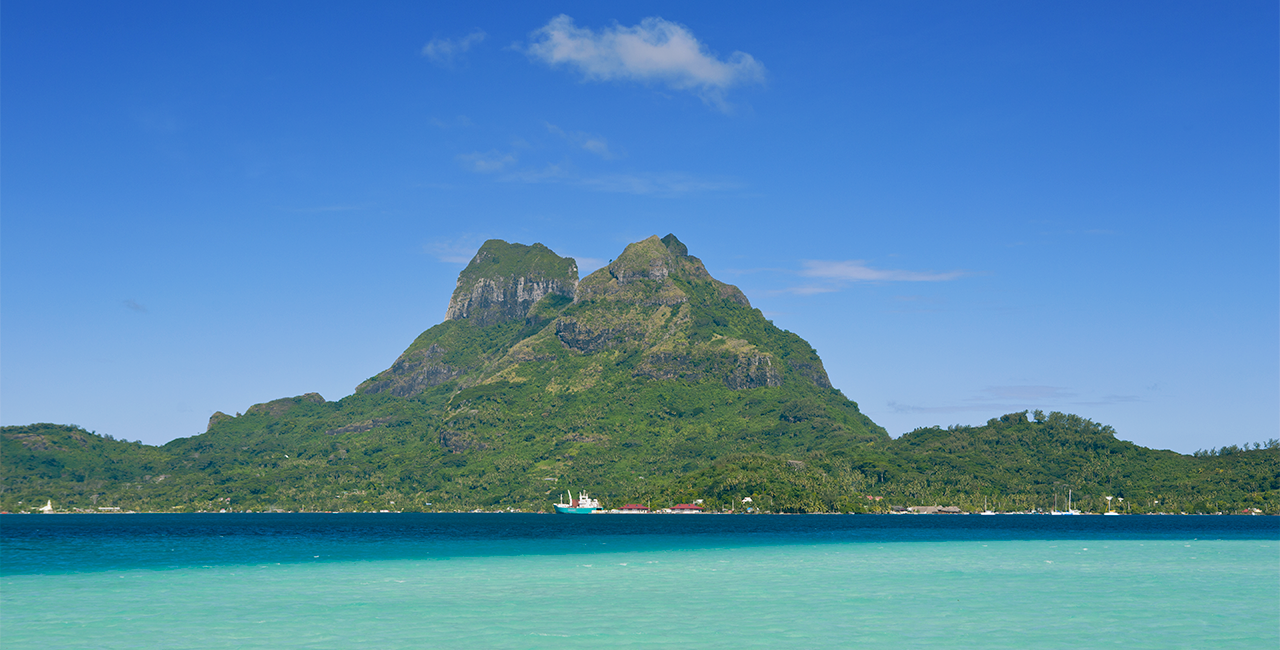
| Bora Bora | Couples seeking overwater stays and families wanting lagoon days | Mount Otemanu, lagoon excursions, and a choice of private-motu or main-island stays | The St. Regis Bora Bora Resort; Conrad Bora Bora Nui; Four Seasons Resort Bora Bora; Le Bora Bora, by Pearl Resorts; The Westin Bora Bora Resort & Spa; InterContinental Bora Bora Le Moana Resort |
| Taha’a | Couples interested in a quiet resort stay and local experiences | Vanilla growers, pearl farms, and coral-garden snorkeling | Le Taha’a by Pearl Resorts |
| Tetiaroa | Couples and families seeking privacy and nature | Beachfront pool villas and naturalist-led wildlife and conservation experiences | The Brando |
| Tikehau | Couples interested in snorkeling, diving, and seclusion | Pink-tinted beaches, manta ray excursions, and Bird Island | Le Tikehau by Pearl Resorts |
| Rangiroa | Divers, families, and groups with varied interests | Pass diving, kayaking, lagoon fishing, and cultural activities | Motu Fara Private Island |
| Nuku Hiva | Active travelers interested in Marquesan history and culture | Hakaui Valley, archaeological sites, and visits with wood carvers | Le Nuku Hiva by Pearl Resorts |
Planning a Multi-Island Itinerary
For seven or eight nights, start with two main island stays, plus a night on Tahiti if the international flight schedule calls for it. With ten nights or more, three islands are easier to consider.
Flight schedules, transfers, and client interests should determine the final combination.
Allow time for the full transfer between resorts: check-out, travel to the airport, the flight, luggage collection, and any onward boat crossing.
Build the route around available connections, and check the return to Tahiti against the international departure. An overnight on Tahiti may help when connections leave little room for delays.
For a family visiting for eight nights, consider one night on Tahiti, three on Moorea, and four on Bora Bora.
A couple with seven nights might spend four on Bora Bora and three on Taha’a, with a Tahiti night added if flight schedules require it.
Where to Stay in French Polynesia, by Island
Tahiti: More Than an Arrival Night
Tahiti brings Papeete Market, waterfalls, black-sand beaches, and cultural experiences into the itinerary.
Papeete Market, waterfalls, archaeological sites, black-sand beaches, and Tahiti Iti can fill an additional day. At a Polynesian perfume workshop, clients blend tiare, vanilla, and other scents into a fragrance they can take home. The Museum of Tahiti and the Islands offers a closer look at Polynesian history and heritage.
Spending an extra night on Tahiti also gives clients more flexibility around international flights and onward connections. Two hotels make particularly practical starting or finishing points.
Which Tahiti Hotel Suits Your Clients?
| Hotel | Who It Suits | Why Recommend It | Important Booking Details |
|---|---|---|---|
| Hilton Hotel Tahiti | Clients arriving late, catching an early ferry, or spending a short time on Tahiti | Airport access, nearby shops and restaurants, and a pool overlooking Moorea | Match the stay to the flight or ferry schedule, with time for the onward transfer |
| InterContinental Tahiti Resort & Spa | Couples and families who want their first or final night to include time at the resort | Two infinity pools overlooking Moorea, a lagoonarium, and overwater bungalows | Overwater accommodation is available; allow time at the hotel to enjoy the pools and lagoonarium |
Moorea: Three Hotels, Three Kinds of Stay
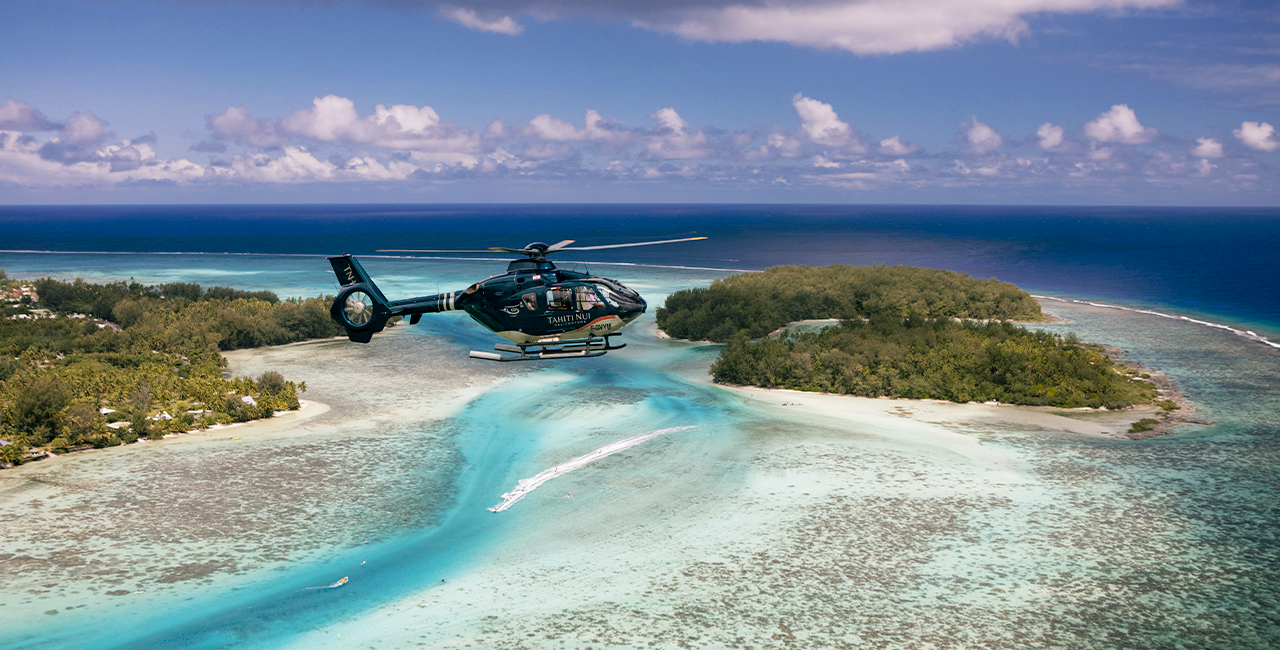
Moorea is one of the easiest islands to combine with Tahiti, reached by ferry in roughly 30 to 45 minutes or a short inter-island flight. Allow time for both the mountain valleys and the lagoon.
In Opunohu Valley, pineapple fields spread beneath steep green mountains. The road climbs toward Belvedere lookout, where Cook’s Bay and Opunohu Bay appear on either side of Mount Rotui.
Along the way, clients can visit archaeological sites, stop for fruit juice and locally made products, or explore on foot, horseback, or e-bike. Give Opunohu the morning, then return to the lagoon for snorkeling or a swim in the afternoon.
For clients who want something more active on the water, a guided Jet Ski tour takes them through both bays, with opportunities to spot rays and blacktip reef sharks.
Which Moorea Hotel Suits Your Clients?
| Hotel | Who It Suits | Why Recommend It | Important Booking Details |
|---|---|---|---|
| Hilton Moorea Lagoon Resort & Spa | Families who want a private pool and couples who have an overwater bungalow in mind | Private-pool garden accommodations and snorkeling directly from the resort. | There’s no formal kids club; confirm available children’s activities and babysitting. |
| Manava Beach Resort & Spa Moorea | Clients who want to head out during the day and have restaurants and shops nearby | Walkable access to Maharepa’s restaurants and shops, with diving and island excursions nearby. | A casual, traditional Polynesian accommodation style; match the room category to the client’s space preferences. |
| Sofitel Kia Ora Moorea Beach Resort | Couples who want plenty of beach time and prefer to dine at the resort in the evenings. | A white-sand beach, overwater and beachfront options, and dining at K Restaurant. | Not all Ocean Villas are beachfront. Check the location and outlook of the selected accommodation. |
For clients who want time exploring the island as well as enjoying their resort, three nights on Moorea is a good starting point.
Bora Bora: Private Motu or Main Island?
In Bora Bora, the resort’s location helps shape how clients spend their stay.
Many luxury resorts sit on private motus, reached by boat from Bora Bora Airport. Guests spend much of their time between the villa, beach, restaurants, and lagoon. A main-island hotel near Matira Beach brings local restaurants, shops, and more of Bora Bora within easier reach.
A lagoon tour by outrigger canoe can include snorkeling in coral gardens and lunch on a private motu. Couples may also enjoy an afternoon of diving or a private boat outing around Mount Otemanu.
Then consider the villa itself: direct lagoon access, room for the family, a private pool, or the particular view they want to wake up to. Swimming conditions, sunset exposure, and dining choices can make a difference, especially over five or more nights.
Which Bora Bora Resort Suits Your Clients?
| Hotel | Who It Suits | Why Recommend It | Important Booking Details |
|---|---|---|---|
| The St. Regis Bora Bora Resort | Couples who want a large overwater villa and families planning plenty of time at the resort | Spacious overwater villas, a protected lagoonarium, complimentary bicycles, and several restaurants. | Private pools are available in selected villa categories; confirm the inclusions before quoting. |
| Conrad Bora Bora Nui | Couples who want sunset views and families looking for children’s programming | West-facing views, a long beach, a hilltop spa, and a dedicated kids club. | Check hillside villa access to the beach, restaurants, and facilities for clients with mobility concerns. |
| Four Seasons Resort Bora Bora | Families who want their own beachfront pool and couples who want to stay above the lagoon | Beachfront villa estates with private pools and beach access; overwater bungalows with Mount Otemanu views in selected categories. | Confirm Mount Otemanu views and pool inclusions for the selected accommodation. |
| Le Bora Bora by Pearl Resorts | Couples drawn to Polynesian design, with wine tasting and golf practice among their interests | Traditional Polynesian design, overwater stays, beach villas with pools, Bora Bora’s only golf practice area, and Uaina wine bar. | Request Mount Otemanu views when selecting the bungalow category. |
| The Westin Bora Bora Resort & Spa | Families interested in marine life and couples seeking overwater accommodations | Spacious overwater villas and a marine conservation center. | Confirm the conservation center’s current visitor activities before including them in the itinerary. |
| InterContinental Bora Bora Le Moana Resort | Couples who want to stay over the lagoon and still head out for dinner | Main-island access near Matira Beach, with local restaurants and shops within easier reach. | Overwater and beachfront bungalows offer different access to the lagoon and beach. |
Taha’a: Vanilla, Pearls, and Time on the Main Island
Taha’a pairs a private-motu resort stay with visits to vanilla growers, pearl farms, and a local distillery.
Le Taha’a by Pearl Resorts sits on a private motu facing Taha’a, reached by boat from Raiatea after an inter-island flight. Thatched roofs, warm wood interiors, and tropical gardens give the resort its traditional Polynesian look, with villas extending over the lagoon.
The coral garden just offshore is a highlight of a stay at Le Taha’a and a compelling reason to recommend it to clients who love snorkeling. Clear water reveals intricate coral formations and vividly colored tropical fish. Give clients time to explore it rather than filling every day with excursions.
Back at the resort, the Cultural Center offers activities such as ukulele classes and an introduction to Polynesian crafts. Arrange a morning on the main island for visits to vanilla growers, pearl farms, or a local distillery.
Three nights allow time for both the resort and the main island. Exploring beyond the private motu involves a boat crossing, and most evenings are spent dining at the resort.
Tetiaroa: The Private-Island Experience
A flight of approximately twenty minutes from Tahiti brings guests to The Brando, one of the most luxurious properties in French Polynesia. Once Marlon Brando’s private retreat, Tetiaroa pairs an exceptional atoll setting with beachfront villas, private pools, and the privacy clients seek for a milestone trip.
The setting deserves time beyond the villa. Tetiaroa Society naturalists lead guided outings to explore the atoll’s wildlife, native vegetation, archaeological sites, and conservation work, giving clients a closer connection to the place they’ve traveled to experience.
For a honeymoon, anniversary, or an exceptional family vacation, The Brando is a stay to build the trip around. Recommend it on its own or as a memorable finale after Bora Bora, with enough time to enjoy both the villa and the atoll. Check available flight connections before confirming the order of stays.
Tikehau and the Tuamotus: More Time Around the Water
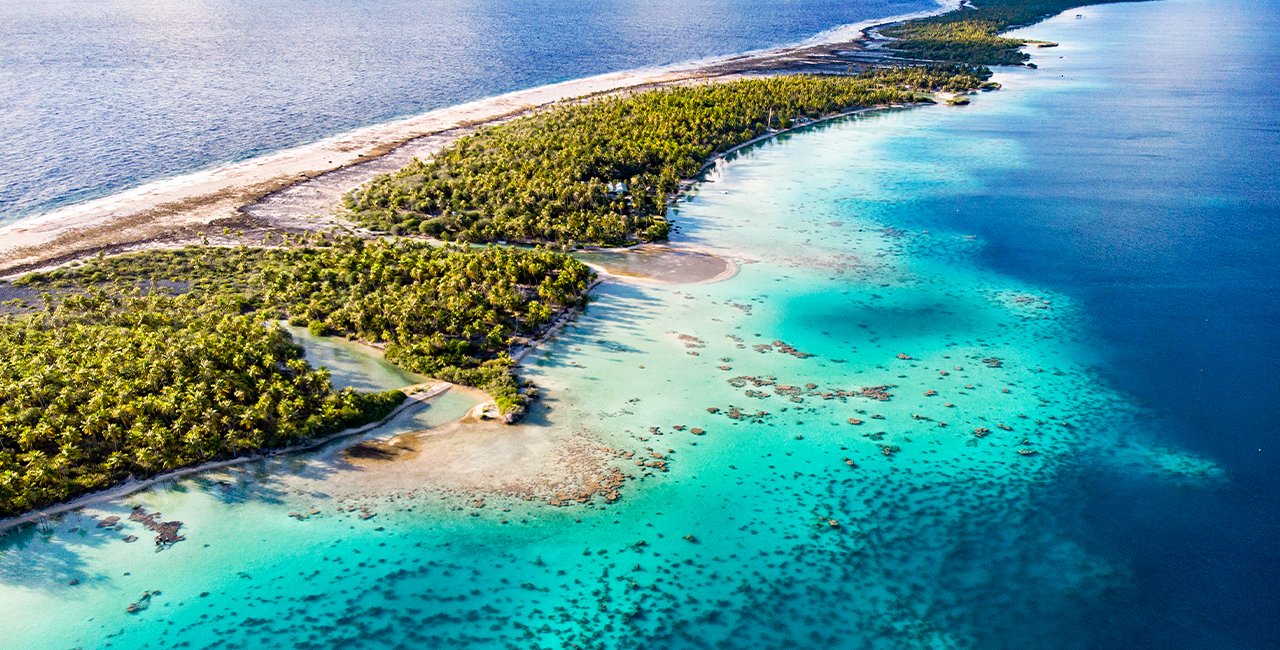
Small motus and stretches of pink-tinted sand surround Tikehau’s lagoon, giving clients a coral-atoll setting after the volcanic islands.
The water is the main reason to come. Snorkeling excursions can bring clients close to manta rays, while diving, visits to Bird Island, and picnics on a motu give them more ways to explore the atoll.
Le Tikehau by Pearl Resorts has overwater and beachfront bungalows, traditional Polynesian details, and a smaller resort setting. Discuss the resort’s dining options when planning the stay.
During the wetter months, keep boat excursions flexible. A snorkeling or diving outing may need to change if sea conditions aren’t suitable.
Tikehau is reached by inter-island flight. Confirm the available connections before setting the order of stays.
Pair Tikehau with Bora Bora for couples who want to spend the next few days enjoying pink-tinted beaches, snorkeling, diving, and the seclusion of a smaller atoll resort.
Rangiroa: A Private-Island Stay in the Tuamotus
Rangiroa is one of the world’s largest atolls, with a vast lagoon surrounded by small islands and a coral reef. Divers come for the Avatoru and Tiputa passes, where they may encounter dolphins, sharks, and other marine life.
Motu Fara Private Island has just two villas, each with a private pool. For an extended family or group of friends, discuss reserving both villas. Confirm occupancy limits, exclusive-use arrangements, and private dining inclusions before booking.
Clients can divide their days between diving, kayaking, lagoon fishing, and cultural activities such as pareu-making and Polynesian dance lessons.
Rangiroa is approximately an hour by air from Tahiti, followed by a boat crossing to Motu Fara Private Island.
Ask how many guests are interested in diving before planning the excursions. Rangiroa’s passes can have strong currents, and the experience needs to match each person’s swimming and diving abilities.
Nuku Hiva and the Marquesas: Mountains, History, and Exploration
Nuku Hiva’s dark volcanic mountains rise above black-sand bays. Farther inland, deep green valleys hold archaeological sites, waterfalls, and villages where Marquesan traditions remain part of daily life.
In Hatiheu, stone platforms and tiki sit beneath banyan trees, with basalt peaks rising behind the bay. A local guide can introduce the history of these sites, while visits with wood carvers give travelers another way to learn about Marquesan heritage.
Exploring Nuku Hiva also means spending time on the road or trails. A 4×4 excursion can take clients through the valleys, while guided hikes and horseback rides bring them farther into the mountains.
Experienced hikers can devote a full day to a guided excursion in Hakaui Valley.
Le Nuku Hiva by Pearl Resorts overlooks Taiohae Bay from the hillside. Its lodge-style rooms suit clients planning full days of hiking, village visits, and guided excursions.
Getting here requires an inter-island flight followed by a road transfer of approximately one and a half to two hours through the mountains. Allow enough nights for guided excursions and flexibility around hiking conditions.
Recommend Nuku Hiva to clients who want their days filled with guided hikes, archaeological visits, and time with Marquesan artisans.
Nature’s Abundance
When Tahiti’s Waterfalls Run Fuller
At Faarumai, a short walk through dense vegetation leads toward the waterfalls. Papenoo Valley takes clients farther into the mountains, with river crossings, deep green slopes, and more time needed for the journey. Farther south, Vaipahi brings tropical flowers, pools, and smaller cascades into the same visit.
During the wetter months, the waterfalls can be especially impressive. Heavy rain can also make trails slippery and river crossings unsafe, so Papenoo and the more demanding routes need a local guide and a close look at conditions.
A Season for Fruit and Flowers
Tahiti Tourisme’s seasonal calendar highlights five things to look for: breadfruit in November, mangoes in December, pineapple in January, tiare flowers in February, and mangosteens in March.
Harvest timing varies across the islands, so treat the calendar as a guide. At local markets, clients can see which fruits, vegetables, and flowers are available during their stay.
Vanilla is another important Polynesian crop, particularly on Taha’a. Plantation visits introduce clients to growers and the work involved in producing Tahitian vanilla.
Lagoon Days: Snorkeling, Diving, and Motu Excursions
Tahiti Tourisme states the average lagoon temperature at approximately 86°F during the Season of Abundance, among the warmest water temperatures of the year. Clients can plan snorkeling, diving, and private boat excursions across the islands.
These waters are also part of a much larger conservation effort. French Polynesia’s Tainui Atea marine managed area covers approximately 4.55 million square kilometers of ocean, with stronger protections in designated zones.
If a private boat day or diving experience matters to your clients, flag it when sending the request. UJV Tropics can help arrange those experiences before arrival.
Culture and Mana
Polynesian Culture Is Part of Everyday Life
Clients can experience Polynesian culture through food, paddling, local crafts, and guided visits to sacred sites.
At an ‘ahima’a, fish, pork, breadfruit, taro, fē’i bananas, and sweet potato cook over heated stones beneath leaves. With a local guide, clients can try paddling a va’a, a Polynesian outrigger canoe.
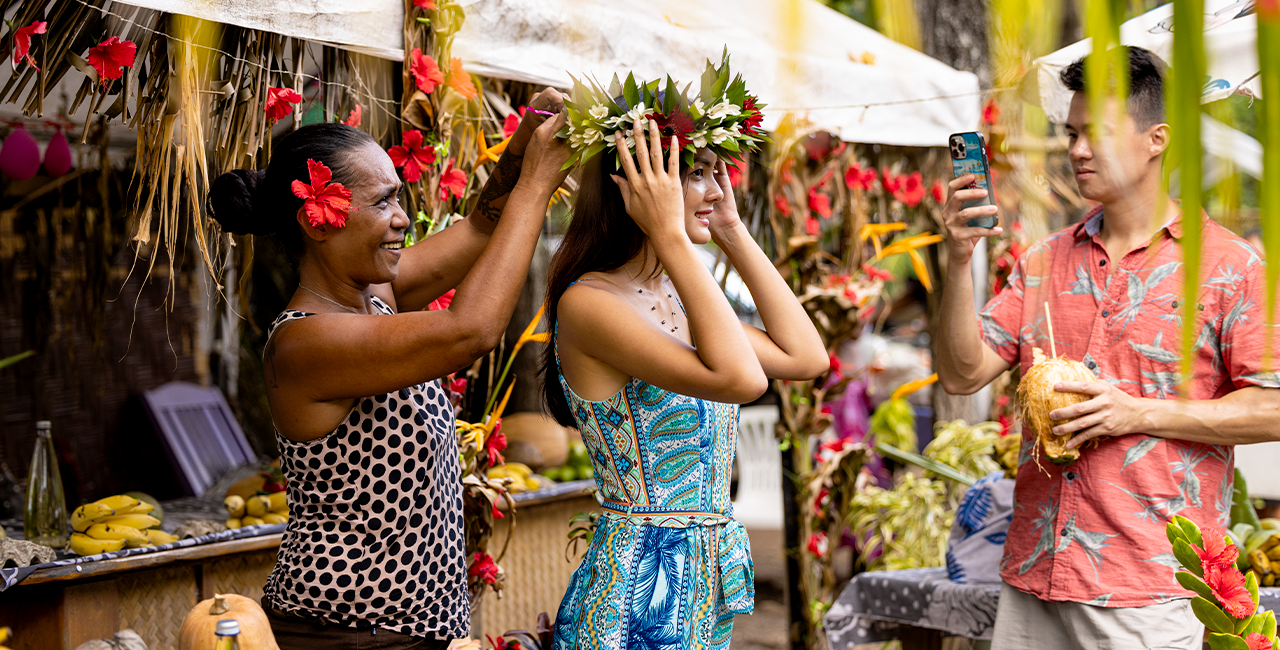
Tatau carry personal and family meaning, and flowers are woven into crowns by hand.
In Moorea’s Opunohu Valley, a local guide can introduce ancient marae: sacred sites used for ceremonies and community gatherings.
On Taha’a, a pearl farm visit shows how oysters are cared for and Tahitian cultured pearls are produced.
In the Marquesas, a local guide can explain Nuku Hiva’s ceremonial sites and their place in the island’s history, while a visit with a wood carver introduces another part of Marquesan heritage.
At Papeete Market and Around the Table
Early at Papeete Market, the produce and fish stalls are already busy: papaya, passion fruit, limes, vegetables, fresh fish, flowers, and tiare garlands. Other vendors sell pareu, woven baskets, wood carvings, jewelry, and Tahitian cultured pearls.
On Sunday mornings, locals come for fresh fish, pu’a rôti, and ingredients for ma’a Tahiti, the traditional Sunday meal. It’s also a good time to try firi firi, a Tahitian doughnut, or poisson cru prepared with coconut milk.
French baguettes and pastries are easy to find, along with Chinese-influenced dishes like chao men. Polynesian staples such as breadfruit, taro, and fresh fish remain central to local cooking. And if your clients see po’e on the menu, it’s worth trying: a fruit dessert often served with coconut milk.
The season’s emphasis on harvest, food, and community is captured in Tahiti Tourisme’s blessing:
“See our land. See our joy of living. See our Mana.”
Value Without the Crowds
Choosing Travel Dates: November Through March
November is one of the first months to consider for value. It sits near the seasonal transition, with fewer visitors and generally more competitive hotel pricing than the busiest periods. The weather is becoming warmer and wetter, but November hasn’t moved as deeply into the humid summer months.
December brings higher humidity and a greater chance of rain. Christmas and New Year have their own demand and pricing; connect with your UJV Tropics Destination Specialist to check rates for the actual travel dates.
January and February are generally the warmest, wettest months, with a greater risk of heavy rain and storms. They can still suit travelers who appreciate fewer visitors and have flexibility to move outdoor activities.
March remains part of the warmer, wetter period, although conditions vary by island and year. It can still be a good option for travelers looking for value outside the busiest periods.
For clients planning a proposal, wedding photographs, or several outdoor experiences on fixed days, find out how much flexibility they have.
A couple who can move a hike, spend another hour over lunch while a shower passes, or leave an afternoon open may find the seasonal rates and experiences worth considering.
What the Savings Can Change
Tahiti Tourisme promotes approximately 30% average savings during the Season of Abundance, along with fewer visitors across the islands.
That’s a campaign average, not a guaranteed discount on every hotel or itinerary. Actual pricing depends on travel dates, flights, room categories, and available promotions.
Before presenting the savings, look at what your clients could do with their budget. Would they value a room upgrade more than another island? Would they prefer more time in one place?
Cultural Events Worth Planning Around
Before confirming the first or final nights on Tahiti, check whether your clients’ dates coincide with a cultural event.
The events below provide cultural context for a seasonal itinerary. Confirm 2026–2027 dates, venues, and attendance details with Tahiti Tourisme before adding an event to a client’s plans.
| Event | Dates | What to Expect | Planning Consideration |
|---|---|---|---|
| Matari’i i ni’a | 2026–2027 schedule to be confirmed | Polynesian traditions, music, and dance mark the beginning of the Season of Abundance. | Once dates are confirmed, consider time on Tahiti for clients interested in the celebration. |
| Ori Tahiti Nui Competitions | 2026–2027 schedule to be confirmed | A traditional Tahitian dance competition. | Check the confirmed schedule alongside Matari’i i ni’a celebrations. |
| Hura Tapairu | 2026–2027 schedule to be confirmed | A dance competition featuring choreography, costumes, music, and storytelling. | Consider a performance if the confirmed schedule aligns with the client’s Tahiti stay. |
| FIFO Tahiti | 2026–2027 schedule to be confirmed | The International Oceanian Documentary Film Festival presents films about Pacific communities, history, culture, and contemporary life. | A screening can be a good addition for clients interested in learning more about Oceania. |
Plan French Polynesia With UJV Tropics
Tell your UJV Tropics Destination Specialist who’s traveling, when they want to go, and which islands they’re considering. Share what matters most to your clients: time exploring, privacy, a particular room category, or experiences they don’t want to miss.
We’ll help you choose the hotels and room categories, check inter-island flights before confirming the route, and coordinate boat transfers, resort arrangements, and excursions.
Submit a French Polynesia request to UJV Tropics, and we’ll help you plan the right combination of islands for your clients.
Frequently Asked Questions
What is the best time to visit Tahiti?
May through October generally offers drier weather and lower humidity. November and April can provide attractive shoulder-season conditions, while December through March brings warmer, wetter weather and potential seasonal value.
Is Tahiti the same as French Polynesia?
Tahiti is one island within French Polynesia and the main international gateway. French Polynesia also includes Bora Bora, Moorea, Taha’a, Tikehau, Rangiroa, Nuku Hiva, Tetiaroa, and many other islands across five archipelagos.
Is November a good time to visit Tahiti?
November can be an appealing choice for clients seeking seasonal value and fewer visitors. It’s near the transition into the wetter months, so compare the actual hotel rates and consider how much flexibility the itinerary allows.
Does it rain every day in French Polynesia from November through March?
Not necessarily. Conditions vary by island and month. Some days bring passing showers and sunshine; others can have prolonged rain. January and February generally carry greater weather risk.
How many islands should clients visit in French Polynesia?
For seven or eight nights, two main islands plus Tahiti for arrival or departure is a good starting point. For ten nights or longer, three islands become easier to manage. Flight schedules, transfers, and client interests should determine the final combination.
Is Bora Bora the only island with overwater bungalows?
No. Moorea has overwater accommodations at Hilton Moorea Lagoon Resort & Spa, Manava Beach Resort & Spa Moorea, and Sofitel Kia Ora Moorea Beach Resort. InterContinental Tahiti Resort & Spa also offers overwater bungalows on Tahiti, with further options at Le Taha’a by Pearl Resorts and Le Tikehau by Pearl Resorts.
Can clients combine Bora Bora with Taha’a or Tikehau?
Yes. Taha’a is reached via Raiatea Airport and a boat crossing. For a Bora Bora–Tikehau combination, check current flight connections before confirming the order and number of nights.